
Very rare passage migrant
Two records from Fairlands Valley Lakes, an adult on 18 April 2023 and one on 24 February 2026.
Very rare passage migrant
Two records from Fairlands Valley Lakes, an adult on 18 April 2023 and one on 24 February 2026.
Very rare passage migrant.
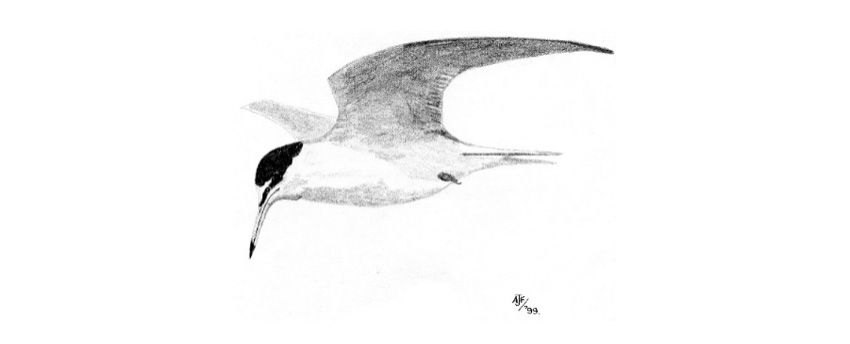
Two records from Fairlands Valley Lakes: three on 5 May 1977 and, one on 9 May 2009.
Rare passage migrant.
Four records from Fairlands Valley Lakes: one on 27 May 1977, three on 1 June 1978, three on 12 May 1980 and, one on 6 May 2011.
One was also seen flying over Kymswell Road on 23 July 2005.
Annual passage migrant and summer visitor.
Annual passage migrants and summer visitors at Fairlands Valley Lakes, from where they were first recorded on 6 May 1974 when three were seen. The most seen together there are 11 on 16 September 1980.
Between 1993 and 2024 between one and seven birds were seen at Fairlands Valley Lakes in the summer. Whilst they are known to travel considerable distances from their nest sites to fish, and this may account for the presence of some of them, others have been seen displaying. The nearest nest sites to Stevenage were at Amwell in the Lea Valley where artificial rafts were provided for them to nest on. In recent years their numbers there declined coinciding with the arrival of breeding Black-headed Gulls (Chroicocephalus ribibundas) on the rafts, with no breeding recorded since 2023.
The earliest date they have been seen at Fairlands Valley Lakes is 5 April 1982, and the latest date is 23 September 2017, when four juveniles were seen.
Rare passage migrant.
Five records from Fairlands Valley Lakes: one on 17 September 1980, two on 4 September 1992, two on 4 April 2008, one on 14 July 2022 and one on 16 and 17 April 2024.
Very rare passage migrant.
Four records from Fairlands Valley Lakes: one seen briefly on 3 May 2006 before flying north east, two on 3 May 2011, one on 23 April 2024 and, one on 21 April 2025.
Abundant winter visitor, passage migrant and, increasingly regular summer visitor.
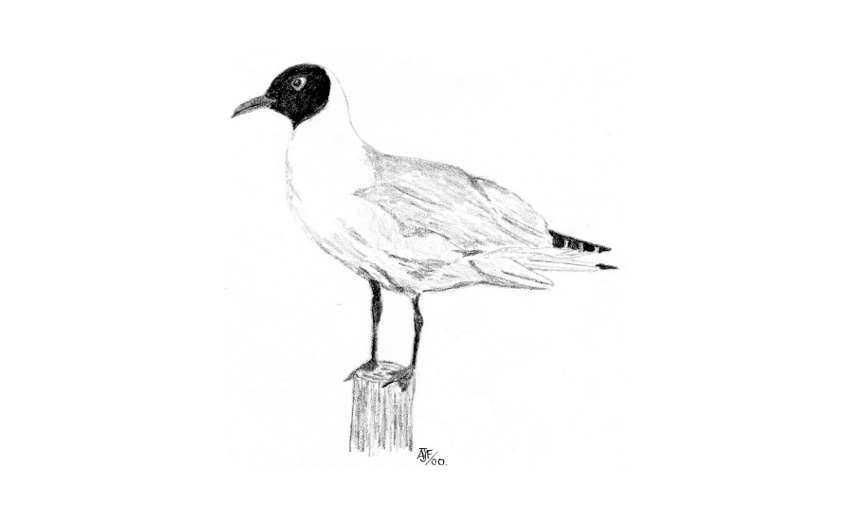
Large flocks are seen in winter passing over and, on playing fields, grass verges, and at Fairlands Valley and Lakes. 300 were seen flying south-east over Astonbury on 17 December 1978, 685 were recorded at Fairlands Valley Park in January 2009, 913 were recorded flying over Stevenage in mid-September 2020 and 1000 were at Fairlands Valley Park on 18 December 2020.
The first record from Fairlands Valley Lakes is a flock of 100, including Common Gulls (Larus canius) that spent all winter there in 1972.
Since 2009 small numbers have been seen throughout the summer, with a large flock of c.600 seen passing over on 28 August 2020. During September and October passage increases and many birds that pass through and arrive at that time are from Scandinavia, the Baltic and the Low Countries.
Ten ringed birds have been seen at Fairlands Valley Lakes:
One on 27 December 2017 and again on 29 October 2021 had been ringed X5T3 as an adult on 28 May 2016 on the island of Riether Werder, northeast Germany.
One seen on 29 June 2020 had been ringed, 2C23, as a nestling at Fishers Green, Essex on 22 June 2019.
One first seen on 31 August 2021 and twice during September 2021 that had been ringed E8Y4 as a nestling on the island of Terschelling, Netherlands on 7 July 2021 was seen again on 21 August 2023 and 31 October 2025.
One ringed, 2A53, at Fishers Green, Essex on 4 July 2017 seen on 12 July 2022.
One ringed, T5JU, as a nestling at Michalowo, Poland (c.1600km from Fairlands Valley Lakes) in June 2019 seen on 30 October 2022.
One ringed 253A as a five-calendar bird at Centre Parcs, Nottingham was seen on 2 January 2023.
One ringed 2FNV as a second calendar year bird at Pitsea Landfill Site, Essex on 6 December 2014 was seen on 10 July 2023.
One bird ringed E8VL was seen on 21 August 2023.
One ringed AB058 in Belarus on 23 May 2024 was seen in October 2024.
One ringed 2F01 at Southend was seen in October 2024.
The 2012 Winter Atlas confirmed their presence from all 11 of the tetrads covering Stevenage.
Very rare passage migrant
Four records: up to five at Fairlands Valley Lakes on 27 and, 28 March 2011, three on 11 April 2016, two on 13 April 2018 and one on 8 March 2024.
Very rare visitor
Five records from Fairlands Valley Lakes: a first winter bird on the Main Lake on 18 January 2009, one on 7 March 2010, a first winter bird on 30 October 2022, an adult on 16 November 2022 and an adult on 13 March 2024.
Regular Common winter visitor and passage migrant.
As winter visitors they are more noticeable during January, February and, March. 300 were seen at Stevenage on 9 March 1975 and, 200 were seen at the Stevenage Football Ground in Broadhall Way on 1 March 1983.
The highest number seen at Fairlands Valley Lakes is 60 on 20 December 2020. Early returning birds have been seen there on 3 July 2000 and 3 July 2016.
On spring migration, they pass through the Stevenage – Hitchin gap on route for the Wash before crossing the North Sea to the Baltic and Scandinavia.
A road casualty found at Symonds Green in 1981 had been ringed in Norway.
A bird with a numbered ring XE46 on its leg seen at Fairlands Valley Lakes on 13 August 2020 had been ringed as a, chick on the island of Langenwerder, off the German Baltic Coast on 29 June 2019. The same bird was again seen at Fairlands Valley Lakes on 21 December 2020, 12 February 2021, 15 and 25 October and 4 November 2022.
The 2012 Winter Atlas confirmed their presence from all 11 of the tetrads covering Stevenage.
Occasional, but increasing visitor, and passage migrant which has bred.
Seen increasingly regularly at Fairlands Valley, flying over the town in small numbers and, birds resting on buildings in the Town Centre.
The most seen together at Stevenage are: 12 on unrecorded playing fields on 31 July 1981; 13 at Fairlands Valley Lakes on 28 May 2017; 20+ at Fairlands Valley Lakes on 22 July 2022; 26 at Fairlands Valley Lakes on 11 June 2023; c.30 at Fairlands Valley Park in early 2024.
A pair were seen mating at Fairlands Valley Lakes in May 2016 and, juvenile birds were seen there in July 2019 which may have been locally bred.
In 2022 breeding at Stevenage was confirmed when an adult was seen feeding young on the roof of Asda Supermarket, Monkswood Way on 23 June. Three adults and seven young were seen at Asda on 30 July 2024 and at least three chicks were seen on the store roof on 17 June 2025.
A bird ringed in Norfolk was seen at Fairlands Valley Lakes on 9 August 2019, a bird ringed as a chick on the Suffolk coast in 2011 was seen at Fairlands Valley Lakes on 9 June 2021 having been previously seen in Leicestershire in 2013 and Cordoba, Spain in 2015 and a bird ringed H287V as a fledgling on the Friesian Island of Amrum, Germany on 1 July 2023 was seen at Fairlands Valley Lakes on 2 June 2025 having been previously seen at Cotesbach, Leicestershire on 11 April 2024 and Milton, Cambridge on 31 January 2025.
The 2012 Winter Atlas confirmed their presence from eight of the tetrads covering Stevenage.
Occasional, but increasing winter visitor.
Although Foster (1914) stated that they had been reported from Stevenage, prior to 1930 they were rarely seen in Hertfordshire. Their increase during the Twentieth Century has coincided with the growth of domestic refuse tips and sewage farms as the Human population has expanded.
At Stevenage they are usually seen flying over in small groups and, with birds increasingly seen at Fairlands Valley Lakes.
The largest numbers seen together are: 10 flying over Box Wood on 6 February 1966; 25 flying over Box Wood on 17 December 1972; 20 by the Hertford Road on 21 January 1974; 16 at Fairlands Valley on 26 September 1979; 11 at Fairlands Valley on 28 January 1980; 25 at Fairlands Valley on 7 February 1980; 35 Fairlands Valley Lakes on 14 February 2021; 50 at an unrecorded location on 6 November 2024.
The 2012 Winter Atlas confirmed their presence from five of the tetrads covering Stevenage.
Two birds seen at Fairlands Valley Lakes on 17 December 2022 had both been ringed at Pitsea Landfill Site, Essex. One ringed, GV37259 was ringed as a second-year bird on 2 April 2016, the other, ringed, GV15765 was also ringed as a second-year bird on 21 March 2015. GV37259 was seen again at Fairlands Valley Lakes on 24 January 2023.
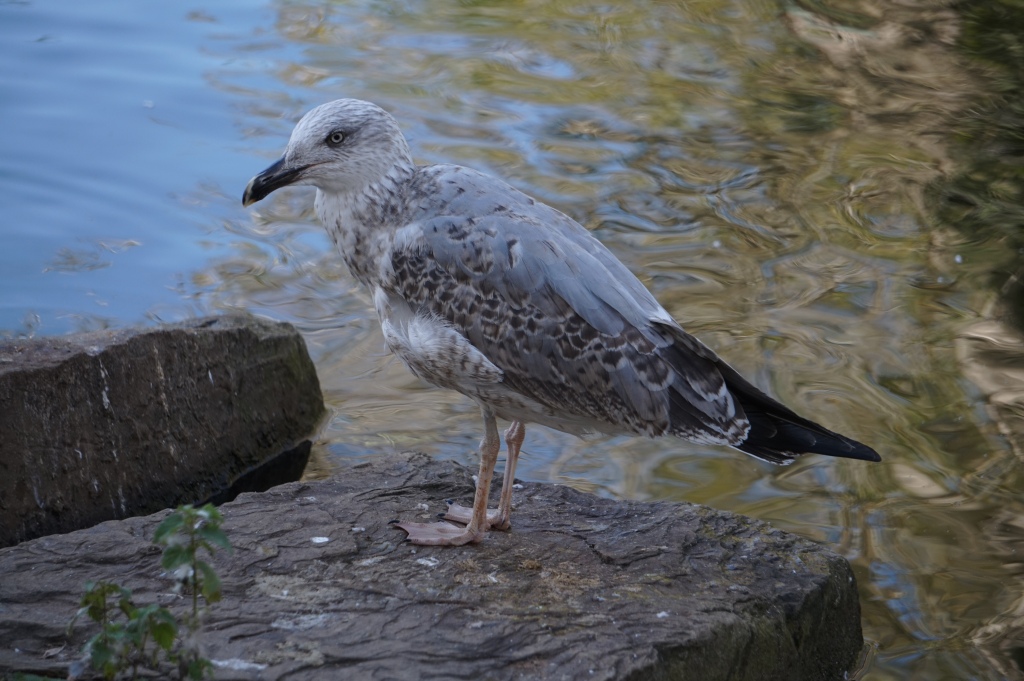
2nd Winter Herring Gull, Fairlands Valley Lakes 28 September 2020
Rare visitor
Nine records from Fairlands Valley Lakes: An adult bird on 1 January 2019; an adult bird on 13 and 14 February 2021; a juvenile on 26 July 2022; a third winter bird on 17 December 2022; an adult bird on 21 January 2024; one on 10 March 2025; a first winter bird on 13 and 19 October 2025; an adult bird on 13 December 2025; an adult bird on 3 January 2026.
Very rare visitor
A, “first winter” bird was seen at Fairlands Valley Lakes on 22 April 2017 with a coloured ring on its leg numbered X307. It had been ringed as a nestling at Oberspreewald – Lausitz, Germany on 6 June 2016. In September 2016 it was seen at the Thames Barrier Park, London and, at Rainham, Essex in October. It was also seen at Amwell, Hertfordshire during January and, February 2017 then, back at the Thames Barrier Park mid-March and, at Amwell again on 11 March.
The same bird was seen again at Fairlands Valley Lakes on 8, 9 and 13 January 2018 and, from 3 to 5 February 2019. Returning in the winter of 2019/20 it was seen almost daily from December 2019 to February 2020 [seen eating a Carp (Cyprinus carpio) on 15 February] and from 17 to 20 March 2020.
On 12 June 2020 it was, “recovered” at Parey in Germany and, noted as probably breeding. It returned to Fairlands Valley Lakes on 12 November and was subsequently seen on 6, 22 and 23 December 2020, regularly in January 2021 and on 12 and 13 February 2021.
On 11 October 2021 it again returned and was seen on various dates during October, November and, December and, during January 2022.
In 2022 it returned earlier than usual and was seen on 25 July and was seen again on 18 and 23 August, 24 September, 7 October, 4 November, 5 and 15 December and several dates in January 2023. It was later recorded at Altfriedland, Brandenburg, Germany on 29 March 2023.
In 2023 it returned even earlier on 21 July and, was seen again on 25 July, 17 August, 11 and 16 October, 5 and 26 December, 2, 16 and 19 January 2024.
Returning again on 25 July 2024 and subsequently seen on 27 July, 4 and 13 August, 8 September, 28 October 2024, 31 December 2024 and 19 February 2025.
In 2025 it returned on 1 August and was seen again on 26 August, 25 September and between 1 October and 12 January 2026.
It is considered that this bird may be a hybrid with some Herring Gull (Larus argentus) genes. The colony in Germany where it was ringed is known to contain Herring Gulls and hybridisation of the two species is not uncommon.
Other records from Fairlands Valley Lakes; a third winter bird on 14 July 2022; a first winter bird on 23 January 2025; a second winter bird on 3 January 2026.
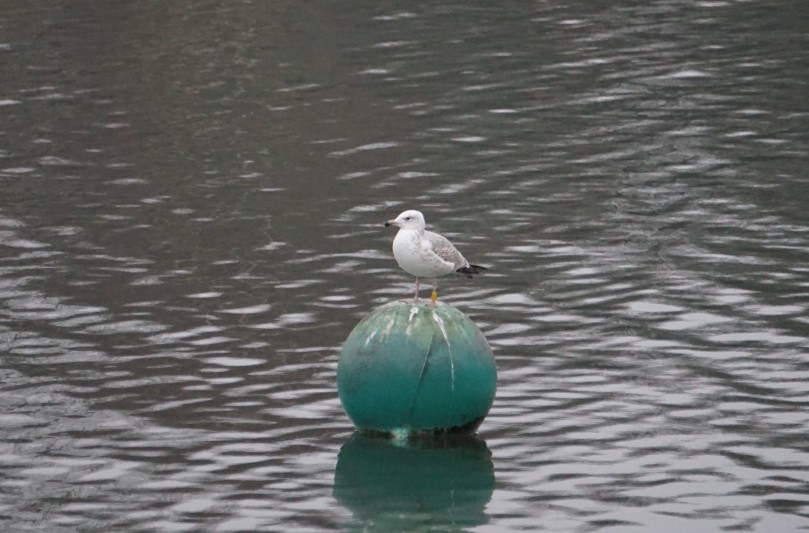
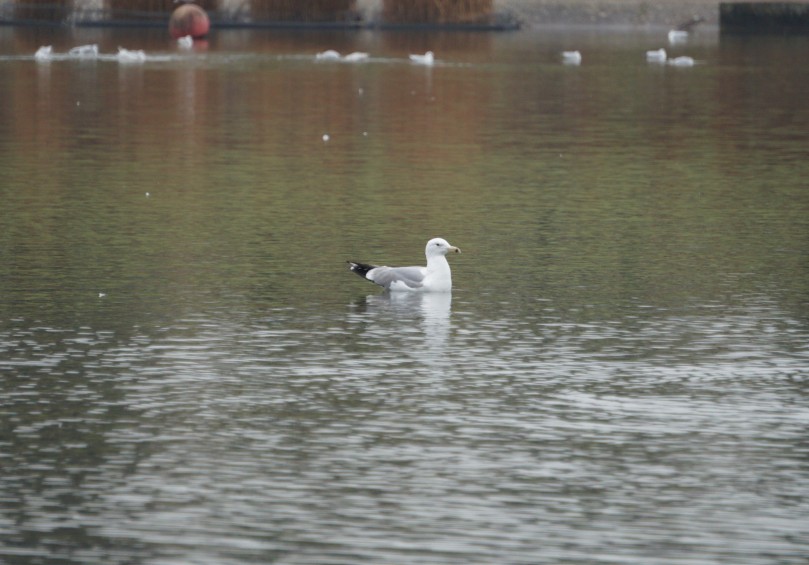
Uncommon visitor.
According to Foster (1914) they had, “occasionally occurred in North Hertfordshire, but were not common”
The records for the 1960s and 1970s are: Single birds over Box Wood on 1 January and 28 August 1965; 20 over Stevenage on 15 March 1968; six over the Old Town, mobbing a Buzzard (Buteo buteo) on 21 May 1968; seen over Monks Wood/Whomerley Wood 1969; one over Fairlands Valley on 2 August 1970; one at the Industrial Area on 10 January 1973; one at Fairlands Valley on 22 January and 18 February 1979.
One record from the 1980s with three at Fairlands Valley Lakes on 18 January 1980.
No known further records until 2016 when one was seen at Norton Green Tip on 8 September. The records since are: one at Fairlands Valley Lakes on 19 January 2020; an adult at Fairlands Valley Lakes on 11 October 2021; one at Fairlands Valley Lakes on 15 December 2022; one at Fairlands Valley Lakes on 6, 19 and 28 January 2023; a first winter bird at Fairlands Valley Lakes on 29 October 2024.
The 2012 Winter Atlas confirmed their presence from the tetrad covering Boxbury Farm.
 The History of the Birds of Stevenage