
Resident and winter visitor in small numbers.
In the nineteenth century Jays were persecuted by, gamekeepers and farmers. They were also shot for their feathers, which were used in the fashion industry, and the blue feathers of their wing coverts used as fishing flies. On 21 February 1968 nine were shot in the Knebworth House Estate and adjoining woods during a shoot to reduce Muntjac Deer (Muntiacus reevesi), and in 1979 some were found on a Gamekeepers’ gibbet by Astonbury.
Uncommon as breeding birds in Hertfordshire during the nineteenth century, Foster (1914) described them as, “common in woods near Stevenage”.
The 1973 Breeding Atlas confirmed breeding from four of Stevenage’s tetrads, the 1992 Atlas from five but, from none by the 2012 Atlas.
The Common Bird Census at Watery Grove recorded them annually between 1972 and 1999 as either being present during the breeding season or holding single territories with, the exception of 1996 when two territories were held.
Breeding was confirmed from Astonbury Wood in 2024.
The 2012 Winter Atlas confirmed their presence from all 11 of the tetrads covering Stevenage.
Jays are prone to occasional irruptions, which may be linked to the failure of the Acorn crop either in Britain or on the continent. In 1882 there was a large immigration of Jays into Hertfordshire. 100 years later in the autumn of 1983 during a notable irruption of Jays into southern Britain the highest count in Hertfordshire was the 40 to 50 flying south over Stevenage on the morning of 4 October.
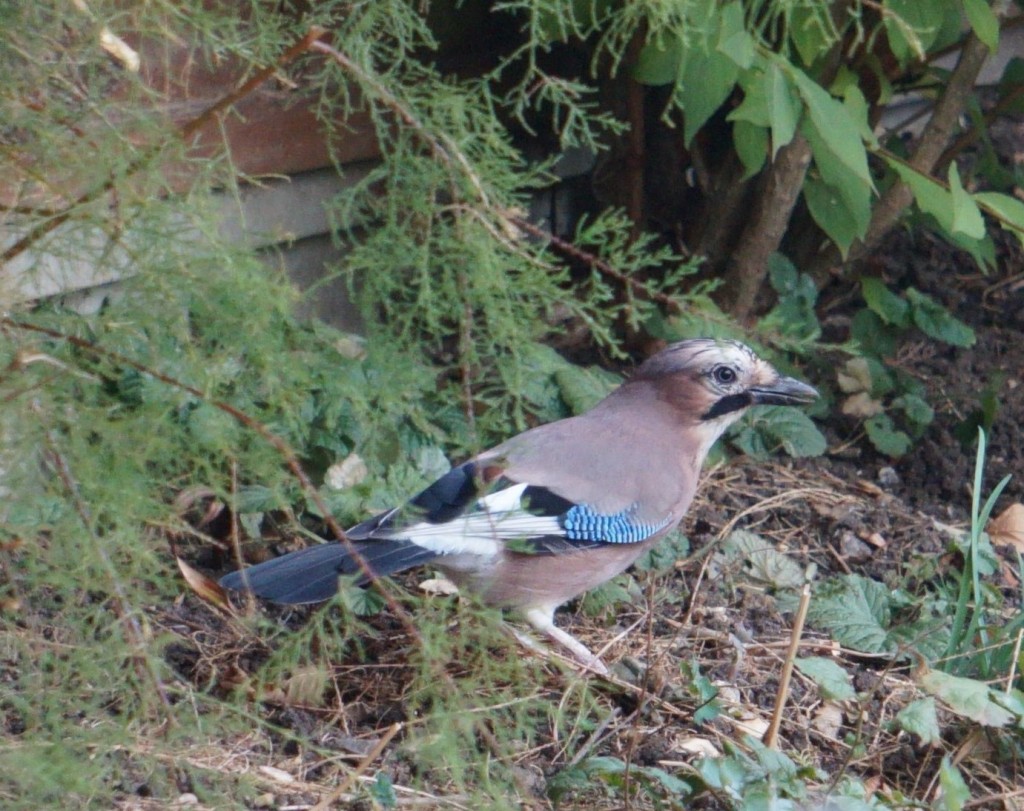
Jackdaw Close October 2018

