SPOTTED FLYCATCHER (Muscicapa striata)

Rare passage migrant, formerly common summer visitor.

The earliest record for Stevenage is 1 May 1909. Foster (1914) described them as, “common near Stevenage”. Today, they are now all but lost as summer visitors to Stevenage.

Until recently Spotted Flycatchers were considered to be one of the most common summer migrants in Britain, they are now in serious decline, having decreased by 42% since 1994. Although fluctuations in the numbers returning to this country were noted in the nineteenth century, the reasons for the present decline appear to be, the greater use of insecticides and pollution resulting in fewer insects on which they depend for food, and the Sahel droughts in Africa. Spotted Flycatchers winter in southern Africa and pass through the Sahel Region on migration. After that region’s drought of 1982/83 the number of birds returning declined dramatically in the springs of 1983 and 1984.

They were formerly recorded at; Aston, Astonbury Manor House, Astonbury Wood, Box Wood, Chells Manor, Chesfield Park, Fairlands Valley, Lonsdale Road, Watery Grove, Wellfield Wood and Whomerley Wood.

The 1973 Breeding Atlas confirmed breeding from seven of Stevenage’s tetrads, the 1992 Atlas from nine and, the 2012 Atlas from just one.

At Watery Grove they were recorded as holding breeding territories by the Common Bird Census in 1972 (one), 1974 (one), 1975 (two), 1979 (two), and 1981 (two). Their presence was recorded in the breeding seasons of 1973, 1977, 1978, 1985, 1987, 1990, 1991 and 1993. One was seen there on 22 September 2005, (the first record from the wood since 1993), and a pair were recorded from there in 2007.

Three unusual records, a pair nesting at the rear of Daneshill House in the Town Centre in 1966, birds seen attacking a Grey Squirrel and mobbing a Tawny Owl at Astonbury Wood on 7 July 1978 and, a family found in the Main Stand at Stevenage Football Club on 4 August 1981.

The recent records are: one at St Nicholas Church on 6 August 2008; one at Norton Green Tip on 22 August 2014; one at Norton Green Tip on 7 May 2015; one at Watery Grove on 6 June 2015; one at Norton Green Tip on 7 September 2016; one at Fairlands Farmhouse on 15 September 2016; Norton Green Tip 5 August 2018; Norton Green Tip two juveniles on 15 and 28 August 2018; Watery Grove 26 August 2018; Upper Kitching Spring 1 September 2018; Shackledell Grassland 19 August 2019 and 4 September 2020; one at Fairlands Valley Lakes on 23, and 26 August 2022; one at Fairlands Farmhouse on 24 August 2022; one at Fairlands Valley Lakes on 5 September 2022; one at Potters Spring on 9 and 10 September 2022; between one and three at Fairlands Farmhouse from 27 August to 2 September 2023; one at Fairlands Farmhouse on 16 and 23 September 2024; one at Telford Avenue on 21 September 2024; one found dead at Vista Tower on 4 September 2025.

The earliest spring arrival date is 17 April 1974 at Fairlands Valley, and the latest departure date is 26 September 1977 at Watery Grove.
ROBIN (Erithacus rubecula)

Common resident and winter visitor.

The three Breeding Atlases confirmed breeding from every tetrad covering Stevenage.

Early, “nest building” was recorded from Stevenage on 24 February 2021 and 17 February 2024.

The 2012 Winter Atlas confirmed their presence from all 11 of the tetrads covering Stevenage.

The largest number recorded is 30 at Aston End on 4 September 2022 and on 3 September 2023.

They were recorded by the Common Bird Census at Watery Grove as holding breeding territories annually between 1972 and 1999, with a maximum of 18 territories being held in 1981. They had quickly exploited the fairly high cut style of coppicing carried out in the wood by the Herts & Middlesex Wildlife Trust in the 1970s, increasing in numbers which were maintained during the period of the census.

A first year Robin ringed at Henlow, Bedfordshire on 4 December 2011 was controlled at Broadwater on 10 December 2011 and was possibly a winter migrant. A juvenile ringed at Fishers Green on 11 July 2008 was re-caught at the same site on 6 February 2014, the bird then being at least 5 years 6 months and 27 days old, the County longevity record for this species is 8 years four months and 30 days

NIGHTINGALE (Luscinia megarhynchas)

Rare passage migrant which formerly bred.

South east England is on the northern limit of the Nightingales range in Europe. Since the 1950’s they have been declining in Britain and, since 1970 have declined by 90%, this is due to climatic change, the result of fewer woods being, “coppiced” and the loss of “scrubby” areas. In Hertfordshire, their preferred habitat is old Blackthorn thickets, much of which has been cleared in recent years.

The earliest record for Stevenage is 27 April 1908.

Although described by Sage (1959) as being rare at Stevenage, they were recorded from Watery Grove, where they were particularly numerous in 1957 and, had also been recorded from Whitney Wood.

At Watery Grove they were also recorded in 1967, 1970 and 1971. The Common Bird Census there recorded Nightingales holding between one and two breeding territories annually between 1972 and 1985, with exception of 1981 (although the Hertfordshire Bird Report from that year recorded four males). Breeding was confirmed in 1972, 1974, 1975 and 1980. Their territories were in Blackthorn hedges at the southern corner of the wood and were often heard singing on fine evenings in late spring. Suddenly, in 1986 they ceased to arrive, and were not recorded again until 1993, when a male was heard singing on eleven separate occasions between 4 April and 30 July. Their absence from this site had been following the removal of a favoured bush. They previously showed little or no tendency to colonize the regenerating coppice in the interior of the wood.

Other records prior to 2000 are: Box Wood (six singing males in 1964, an early bird heard on 16 April 1965, four singing males on 24 May 1965, four singing males on 4 May 1966, two on 12 May 1967, three singing males on 23 May 1968, one singing male on 4 May 1969, two singing males in 1970 and one feeding young on 16 June 1970, and, a juvenile bird ringed on 29 August 1979); Martins Wood (two singing males heard on 29 April 1966); Norton Green (two singing males on 12 June 1966 and three including two males during May 1994 with one pair remaining); Whomerley Wood (a male singing between 30 April and 20 May 1997 from a recently “coppiced” area and two on 14 May 1998).

Since 2000 the records are: Chells Manor (single birds on 14 May 2004, 11 May 2010 and 22 and 29 April 2011); Fishers Green (one on 23 April 2011).

The 1973 Breeding Atlas confirmed breeding from two of Stevenage’s tetrads, the 1992 and 2012 Atlases from none.

PIED FLYCATCHER (Ficedula hypoleucos)

Rare passage migrant, which may have attempted to breed.

The earliest record is of one shot near Stevenage on 13 May 1887.

Other records of passage birds are: one seen in heavy rain in a Newgate garden on 15 September 1969; one at Top Pond, Astonbury on 19 September 1969; male in full breeding plumage at Astonbury on 29 April 1970; one at Watery Grove on 30 April 1971; one at Astonbury on 11 August 1975; a female at Astonbury Wood on  9 May 1979; a male at Watery Grove on 25 April 1980; a male at an unrecorded location on 30 April 1985; a female at an unrecorded location on 4 May 1985; one at an unrecorded location on 10 July 1987; a female in a Fishers Green garden on 12 August 1994; a male at Monks Wood on 24 April 1997; a first winter bird in a Martins Wood Garden on 4 September 2008; a male at Warren Springs Laboratory on 19 April 2013; one at Derby Way on 29 August 2015; two first year birds at Fairlands Farmhouse on 24 August 2022; two at Potters Spring on 9 and 10 September 2022.

Potential breeding records are: a female seen at Astonbury Wood on 10 June 1978; and a bird visiting a nest box in Granby Road for 10 days up to 4 June 1990.

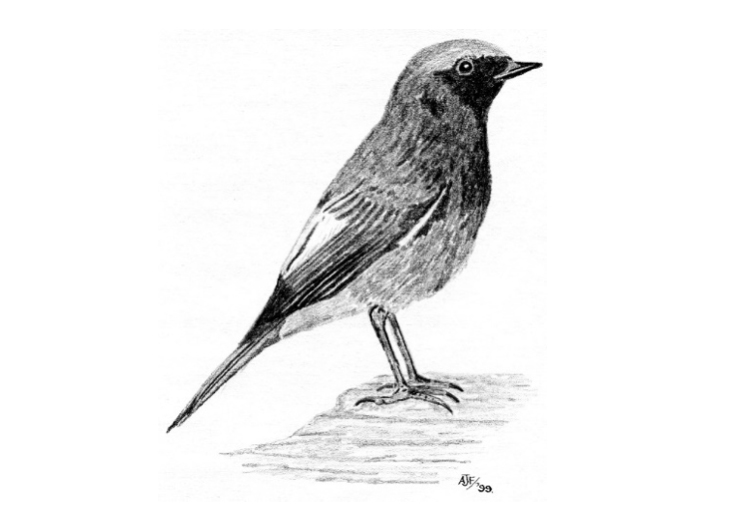
BLACK REDSTART (Phoenicurus ochruros)

Uncommon passage migrant and winter visitor that has bred.

Black Redstarts are scarce as breeding birds in Britain and are only recent colonizers of the country. Their northward spread from southern Europe had begun in the nineteenth century, and they were first recorded as breeding in Britain in 1923. Although they are birds of rocky mountainous areas with bolder strewn scree, they are in Britain associated with industrial wasteland and buildings, particularly rambling commercial structures.

In 1975 and 1976 a pair successfully bred at the now demolished Warren Springs Laboratory, five fledged young were seen on 22 July 1976. A female was seen at this site in May 1977. A pair were also seen on 15 and 19 August 1991, at this time Warren Springs was being redeveloped by Glaxo, but some of the old laboratory buildings had still to be demolished. Breeding was confirmed again in 1993, and the following observations by John Melling were published in the 1993 Hertfordshire Bird Report. “The pair nested at the same site last used in 1976, underneath a metal stairway about 3.5m above ground level. Hatching took place on or about 11 June and fledging around the 28. Up to four young were seen thereafter with two still present on 19 August. The parents were unobtrusive before hatching but the male sang regularly from 27 July until 19 August. Only the male was seen from the 24 August with the plumage becoming more developed. Although seen on only four days in September sightings were more frequent in October with singing last heard on the 13 September plus a final sighting on 1 November.” In 1994 a pair were reported to have raised one young on a construction site, and it is assumed that this was also at the Glaxo site. Males were also seen at this site on 25 February 1996 and 10 June 1997. Possible breeding was also recorded from Stevenage in 1974, and whether this was also at this site is not known.

Other records for Stevenage are:

One at an unrecorded garden April 1973; two females observed for 30 minutes outside the Bakery in Cartwright Road on 21 October 1973; two at Watery Grove on 6 April 1974; a pair at an unrecorded location for three days in April 1978; a singing male at Box Wood on 8 and 9 April 1979.

A female behind Box Wood on 7 May 1980; one at an unrecorded location on 4 April 1984 and a pair in early May; one at Pin Green on 14 March 1989.

Male Norton Green on 23 March 1992; female Edmonds Drive on 6 April 1994; one at an unrecorded location on 16 December 1996; male at an unrecorded location on 10 June 1997; one at an unrecorded location on 22 January 1998.

A male at an unrecorded location on 19 April 2000; one in a Garden on 5 January 2003; female at Norton Green Tip on 12 May 2004; female at Norton Green Tip on 14 April and 11 May 2005; female in a Great Ashby Garden on 23 October 2006; one at Norton Green on 19 April 2008.

One near the Six Hills on 26 October 2011; first summer male on 18 March and a female on 19 March 2012 at Norton Green Tip; female at Argyle Way on 31 October 2012; one at Norton Green Tip from 15 to 27 April 2013; female at Norton Green Tip on 24 April 2014; one at Norton Green Tip on 31 March and 17 April 2016; female in an Aston Garden on 25 and 26 March 2020.

One at an unrecorded location on 10 April 2021; female in a Jackdaw Close Garden on 6 April 2023; one in Great Ashby Way on 1 November 2025.

REDSTART (Phoenicurus phoenicurus)

Rare passage migrants.

Redstarts have always been scarce as breeding birds in Hertfordshire.

One was seen at Stevenage on 24 April 1930. Foster (1934) claimed that they used to nest near Stevenage (a pair was seen by Doctor C. Grosvenor on 15 May 1932) but had, by then deserted the area except on rare occasions.

They were badly affected by the Sahel drought of 1968/69, when it was estimated that 75% of their number were lost.

In the 1960s and 1970s birds were seen at: Box Wood (7 September 1966, 7 September 1967, 15 April 1968); Fairlands Valley (male 1969); Popple Way (female 30 August 1975); Un-recorded location (male 21 April 1974, one killed by a Cat 12 September 1978); Watery Grove (30 April 1970).

In the 1980s and 1990s they were recorded from: Chells Way (14 March 1989); Norton Green (10 April 1988); Ripon Road (21 October 1981); Un-recorded location (7 August 1980, 24 September 1994, 24 March 1995, 24 April 1996, 20 September 1997).

Since 2000 they have been seen at: Aston Allotments (male 16 April 2015); Derby Way (male 14 September 2007); Dyes Lane (a male and female from 27 to 29 August 2021); Norton Green Tip (2 September 2015, male 10 April 2017, male 30 August 2020); River Beane east of Chells Manor (female 21 September 2008); Un-recorded location (female 20 April 2006, 18 August 2010).

ROCK THRUSH (Monticola saxatilis)

A very rare vagrant

A male was seen feeding in the ruins of St. Etheldreda’s Church, Chesfield on the evening of 8 May 1983. This was only the second record of this species being recorded in Hertfordshire. The first record was of one shot at Therfield on 19 May 1843, which was also the first record for Britain.

WHINCHAT (Saxicola rubetra)

Uncommon passage migrant.

Foster (1914) described the Whinchat as, “a common summer visitor in all the district, nesting wherever suitable localities occur”.

They are regularly seen at Norton Green Tip, on spring and autumn migration, and since 2004 have been recorded almost annually. The most seen together there are, five on 27 August 2010. The earliest spring date they have been seen there is 19 April 2006, and the latest autumn date is 29 September 2012 and 29 September 2021. The most recent record is of two on a field next to the Tip on 7 September 2024.

One seen at Norton Green Tip on 23 April 2020 may have been taken by a Sparrowhawk (Accipiter nisus).

Away from Norton Green Tip: two seen at an un-recorded location on 24 September 1969; one at Fairlands Valley on 29 May 1972; one at Aston End on 4 September 1976; single birds at Box Wood and, waste ground at Cartwright Road on 1 May 1984; one at an unrecorded location on 25 April 1995; a late migrating bird near Astonbury on 29 October 1995; one at Lords Farm, Aston on 6 May 1996; one at Dyes Lane on 5 September 2021; two at Lords Farm, Aston End on 3 September 2023.

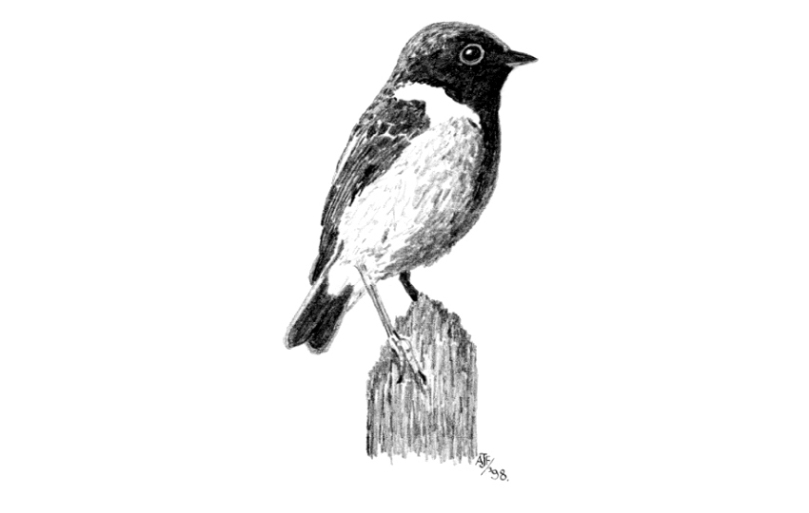
STONECHAT (Saxicola torquata)

Uncommon passage migrant and winter visitor.

At the beginning of the twentieth century Stonechats were common as breeding birds on the heaths and commons of Hertfordshire. They were however always rather local as nesting birds in North Hertfordshire, and had ceased breeding in the area by the late 1930s. They suffer badly in hard winters and the winter of 1916/17 had caused a major decline in their numbers.

The earliest record for Stevenage is of one seen on 15 March 1908.

They are regular winter visitors to Norton Green Tip and, are also seen there on spring and autumn migration. The most seen together there is four, two Males and two females seen between 29 September and 2 October 2018 and four on 17 February 2024. The most recent record is from 17 February 2024.

Other records:

One seen during the winter of 1961 at an unrecorded location.

A male at Symonds Green on 15 February 1974

One near the Bakery in Cartwright Road on 18 October 1981.

One at Aston on 27 February 1993.

A male on waste ground at Great Ashby Way on 9 March 2006; a female at Great Ashby on 15 October 2006; one near Aston End Lane between 25 November and 1 December 2007, and again on 27 January 2008.

Two first winter birds at Potters Spring on 23 February 2018; a pair near Astonbury on 8 March 2020; one at New Park Lane, Aston on 10 November 2020.

One at Aston End on 8 October 2022; one near Astonbury on 2 and 22 October 2023; three at Kitching Lane on 17 February 2024; a male and female at Aston End on 10 November 2024; one east of Great Ashby Park on 23 December 2024 and 4 January 2025; one east of Great Ashby Park on 28 September 2025.

WHEATEAR (Oenanthe oenanthe)

Regular passage migrants.

Foster (1914) described Wheatears as, “not common near Stevenage” (one had been recorded on 4 April 1909).

The earliest spring date is 15 March 2008 and 2012 at Norton Green Tip and the latest autumn date is 20 October 1969 between Lytton Way and the Railway.

They are regularly seen on spring and autumn migration at Norton Green Tip from where they were first recorded on 21 March 1967. Since 1984, (when four were seen on 22 April) they have been recorded almost annually between March and May. The most seen on spring migration is 16 plus on 5 May 2012. On autumn migration between August and October the most seen is four on 9 September 2011. The most recent record is of two on a field next to the Tip on 7 September 2024.

They have also been seen on spring and autumn migration at: the former Amoco Laboratory (now part of Glaxo), Aston, Astonbury Farm, Aston End, Botany Bay Farm (now part of the Great Ashby development), near Box Wood, Bragbury End, Chesfield Park, Dyes Lane, Epsom Close Football Pitches, Fairlands Valley and Lakes, Great Ashby Way , Gunnels Wood Road, The former ICL Factory (now Fujitsu), Lingfield Road, between Lytton Way and, the Railway, Mobbsbury Lane, Potters Spring, the River Beane between Aston and Aston End, Stevenage Cricket Club, Ditchmore Lane and, Trotts Hill School.

A male showing characteristics of the larger race O. o. leucorroa (“Greenland” Wheatear) was seen at Stevenage between 15 and 22 April 1983. “Greenland” Wheatears have also been seen at Norton Green Tip on 5 May 2004 (two), 2 May 2005, 30 August 2007, 8 May 2009 (three), 26 April 2010, 30 April 2010 (14), 21 April 2011, 1 May 2012 (at least two), 24 April 2014 (two) and 28 April 2018 (two).

There are also four summer records: a juvenile bird at an unrecorded garden location on 9 July 1968, one seen near Stevenage on 3 June 1984, (this was the second year that this undisclosed site had had a summer record), single birds in June and July 2007 at Norton Green Tip and two males and a female near Box Wood on 3 June 2021.

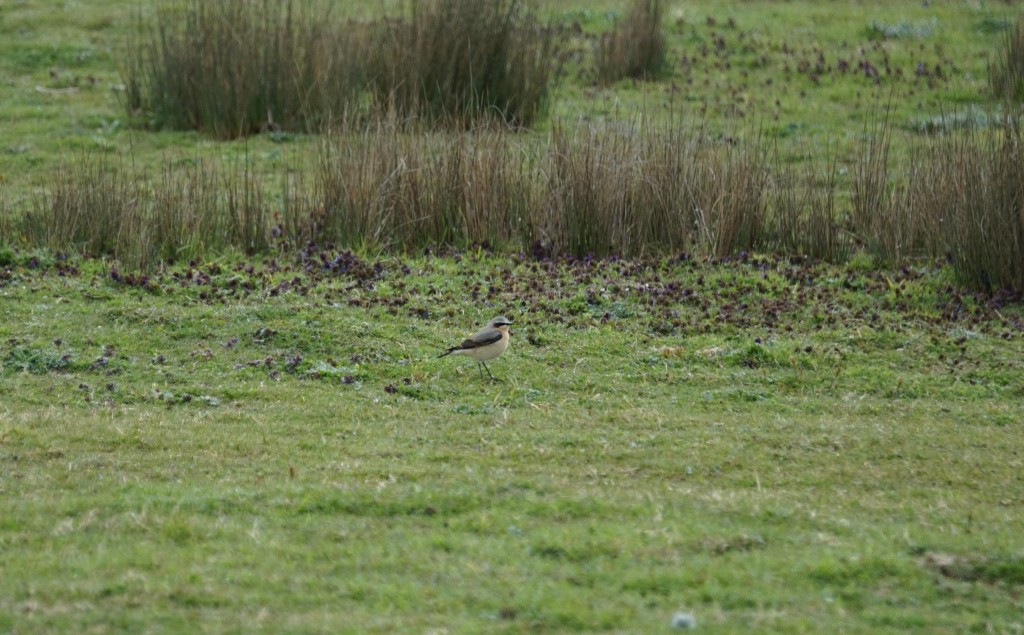
Norton Green Tip 9 April 2021.